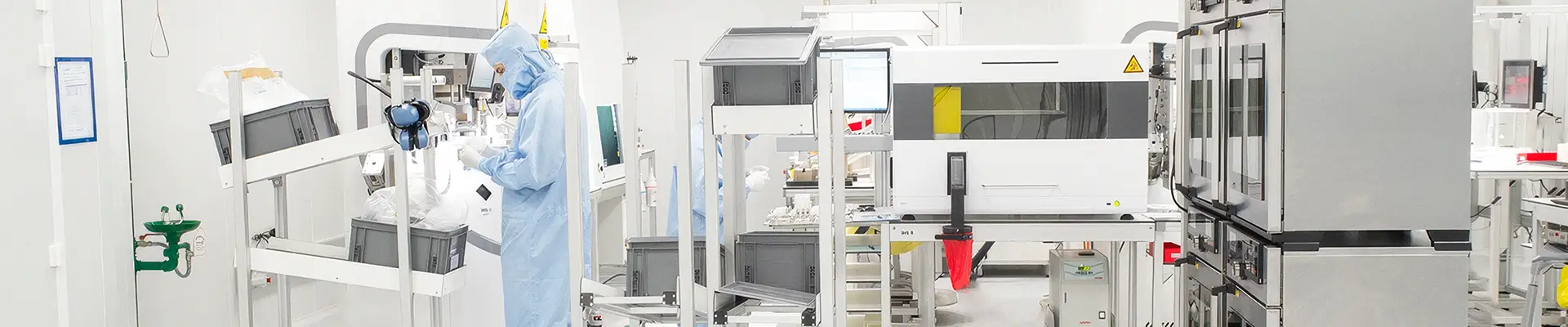
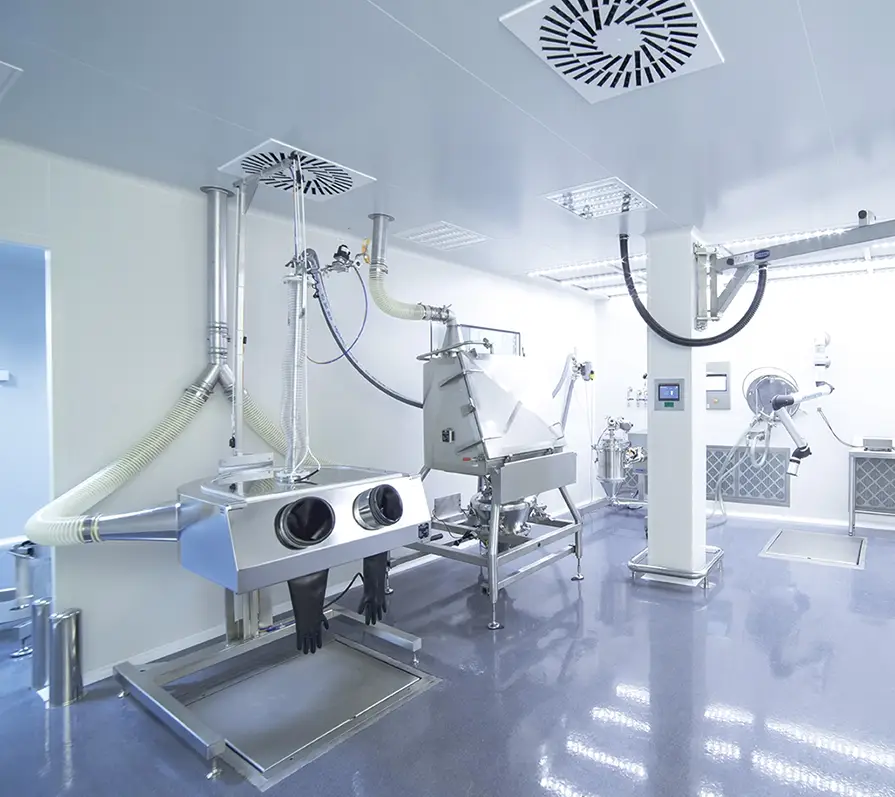
Cleanroom design is an engineering process focused on contamination control in critical environments such as the pharmaceutical, biotechnology, electronics, and medical industries, ensuring compliance with ISO 14644 standards and maintaining controlled environmental conditions.
At Valtria, we design cleanrooms according to ISO classification requirements, process specifications, and regulatory standards, defining HVAC systems, pressure control strategies, and facility layouts to ensure regulatory compliance and operational efficiency.
Key factors in cleanroom design
A cleanroom project must consider:
Cleanliness classification (ISO 14644)
HVAC system
Differential pressure control
Personnel and material flows
Construction materials
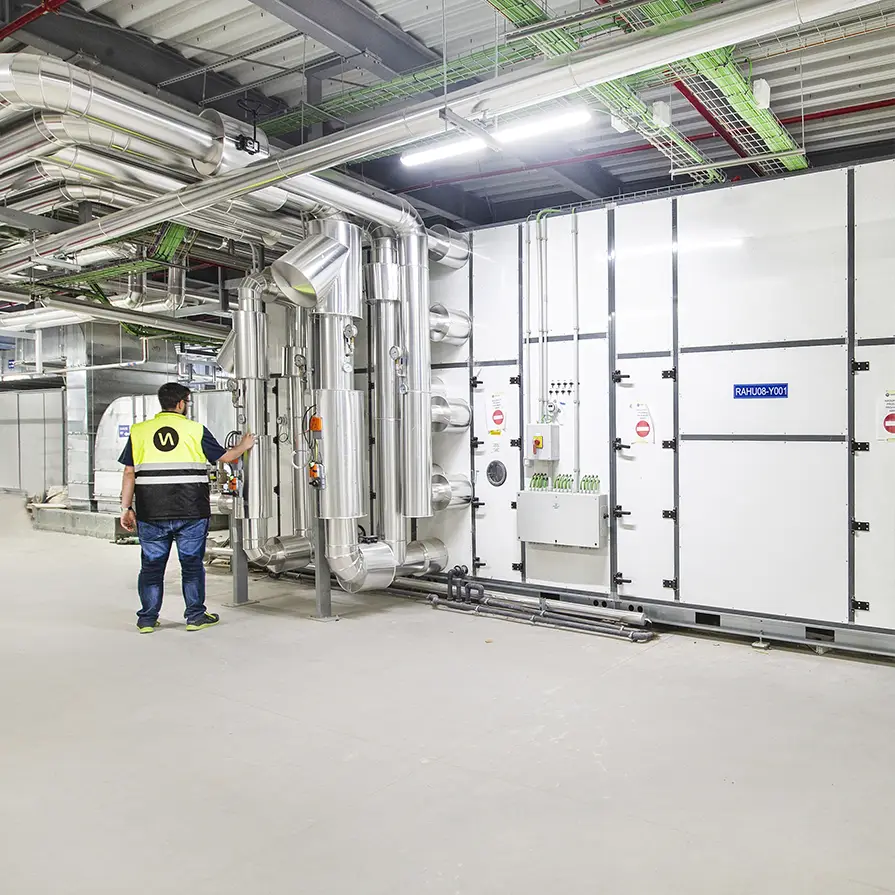
HVAC system and environmental control
The HVAC system maintains the environmental conditions of the cleanroom through:
Air filtration systems (HEPA / ULPA)
Temperature and humidity control
Air changes per hour (ACH)
Differential pressure control
Proper HVAC system sizing is essential to achieve and maintain the required ISO classification.
Airflow and filtration
Airflow design prevents particle accumulation inside the cleanroom:
Laminar airflow → maximum cleanliness
Turbulent airflow → controlled air distribution
HEPA and ULPA filtration systems ensure the retention of microscopic particles.
Layout and facility organization
The cleanroom layout must minimize cross-contamination through: