
Controlling costs while safeguarding quality and regulatory compliance is one of the greatest challenges in the pharmaceutical sector. Nowhere is this more evident than in the design of GMP (Good Manufacturing Practice) facilities for advanced therapies such as CAR-T. Here, the balance between capital expenditure (CAPEX) and operational expenditure (OPEX) becomes central to making informed, long-term decisions.
Understanding CAPEX and OPEX
- CAPEX refers to the upfront investment required to design, construct and qualify a facility. It covers building works, specialist equipment, automation, HVAC and utility systems.
- OPEX (Operational Expenditure): represents the ongoing cost of running that facility: energy, staff, maintenance, spare parts, periodic re-validation, cleaning, training and indirect overheads.
Reducing CAPEX can appear attractive at the start of a project. Yet, in practice, cutting corners on initial investment often leads to disproportionately higher OPEX over the lifetime of the facility undermining overall profitability.
Illustrative Examples
- Opting for cheaper but less efficient equipment may save money upfront, but typically results in higher energy bills and more frequent servicing.
- Poorly planned equipment layouts can lead to expensive dismantling or extended downtime whenever maintenance is required.
The lesson is simple: short-term savings in CAPEX can quickly be outweighed by long-term operational costs.
Two Design Philosophies in Advanced Therapies
In today’s cell and gene therapy facilities, two GMP design approaches dominate: the open model and the closed model. Each offers advantages, but their economic implications differ sharply.
The open model is based on production directly within classified rooms, with manual intervention in high-cleanliness environments, where people and materials follow a rigorous access sequence. This approach requires large classified areas and greater environmental control due to the product’s direct exposure to the environment.

On the other hand, the closed model relies on the use of isolators or containment systems that isolate the product from the environment, allowing work to be carried out in lower classification rooms. Here, operations are carried out within a closed technical system, which reduces infrastructure requirements and the process’s exposure to microbiological risk.
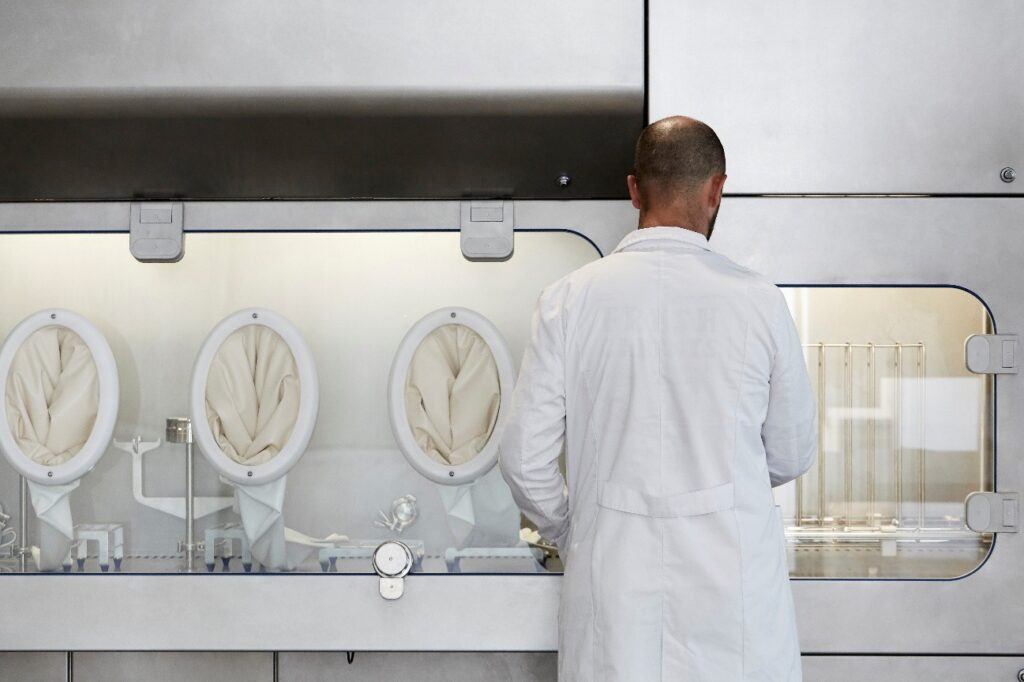
Both models are valid, but their impact on CAPEX and OPEX is substantially different.
The Open Model
- Production takes place directly in high-grade cleanrooms (Grade B, occasionally with Grade A areas).
- Personnel must follow rigorous gowning procedures, moving through cascades of Grade D and C rooms.
- HVAC systems must deliver high airflow volumes and pressure differentials to meet classification requirements, driving energy consumption.
- Larger thermal loads demand powerful chillers and boilers.
Heavy reliance on human intervention increases both staffing and environmental monitoring needs.
Financial profile:
- Lower apparent CAPEX, as no isolators or specialist closed systems are required.
- However, OPEX can be up to 60% higher compared with closed systems, due to energy demand, consumables, and labour costs.
The Closed Model
- Production occurs within isolators or enclosed systems, typically in Grade D or C areas.
- Personnel flows are drastically reduced, and gowning requirements are simplified.
- Smaller HVAC systems are sufficient, lowering both capital and operational loads.
- The classified footprint is reduced, along with the extent of environmental validation.
Financial profile:
- CAPEX is typically 15–20% higher, reflecting the cost of specialist containment technology.
- Yet OPEX is far lower: consumables per batch may fall by up to 90%, while energy use and staffing levels decrease proportionally.
Why OPEX Rises in Open Facilities
- Consumables: Extensive gowning, single-use materials and frequent validations carry a significant cost.
- Staffing: More operators in high-grade rooms means greater training requirements, higher risk of error and higher PPE costs.
- Energy: Oversized HVAC and utility systems consume large amounts of power.
This does not make the open model invalid it simply defines a different cost structure. For some operations with lower batch numbers or short-term objectives, the open model may still make sense.
Conclusion: ROI as the Real Benchmark
In advanced therapies, every batch can represent a unique and critical treatment. Facility design therefore has a direct bearing on operational sustainability. To judge whether the open or closed approach is most suitable, focusing solely on CAPEX or OPEX is insufficient. The more meaningful metric is return on investment (ROI):
ROI = (Operational savings + Efficiency & Compliance benefits) ÷ Initial investment
This perspective does not dictate which model is “better”. Instead, it enables a client to align design choices with their specific production strategy, batch volumes, workforce model and time horizon.
There is no universal answer. The right choice depends on aligning facility design with long-term business goals.
The closed model requires a greater upfront outlay, but delivers safer, leaner and more scalable operations, with ROI supported by lower operating costs and stronger compliance.
The open model may offer lower entry costs, but often locks in higher running costs and limited scalability over time.
Ultimately, thinking in terms of ROI rather than CAPEX or OPEX in isolation ensures GMP facilities for advanced therapies are not only compliant from day one, but sustainable, efficient and strategically sound for the years ahead.

Juan Quesada
Head of Engineering and Bidding at Valtria, Madrid office.