
Controlling costs while maintaining quality and regulatory compliance is one of the greatest challenges facing the pharmaceutical industry. This is particularly critical when designing GMP (Good Manufacturing Practice) facilities for advanced therapies such as CAR-T. In this context, striking the right balance between capital expenditure (CAPEX) and operational expenditure (OPEX) is essential to making informed, sustainable long-term decisions.
This article explains both concepts and how they influence design decisions, with a particular focus on comparing open and closed manufacturing models for advanced therapies and their short- and long-term economic implications.
What Are CAPEX and OPEX in a Pharmaceutical Facility?
- CAPEX (Capital Expenditure): the initial investment required to design, build and validate a facility. This includes construction work, equipment, automation, HVAC systems, utilities and other infrastructure.
- OPEX (Operational Expenditure): the costs associated with the ongoing operation of the facility, including energy, personnel, maintenance, spare parts, periodic validation, cleaning, training and indirect costs.
Reducing CAPEX may seem attractive during the early stages of a project, but these initial savings are often offset by a disproportionate increase in OPEX, ultimately affecting the facility’s overall profitability.
Some basic examples illustrate the difference:
- Choosing less efficient, lower-cost equipment reduces CAPEX but results in higher energy consumption and more frequent maintenance.
- Positioning equipment without considering maintenance access routes can lead to costly dismantling work or extended downtime.
Technical decisions of this kind, when made without a lifecycle perspective, can compromise the system’s future efficiency.
The Case of Advanced Therapies: Two Models, Two Strategies
In the manufacturing of advanced therapies such as CAR-T, gene therapy and cell therapy, two GMP design approaches are currently used: the open model and the closed model.
The open model is based on manufacturing directly within classified cleanrooms, with manual operations performed in high-grade clean environments and personnel and materials following strict access and transfer procedures. This approach requires larger classified areas and greater environmental control due to the product’s direct exposure to the surrounding environment.
By contrast, the closed model relies on isolators or containment systems that separate the product from the surrounding environment, allowing operations to be carried out in cleanrooms with a lower classification. In this model, operations take place within a closed technical system, reducing infrastructure requirements and limiting the process’s exposure to microbiological contamination risks.
Both models are valid, but their impact on CAPEX and OPEX differs significantly.
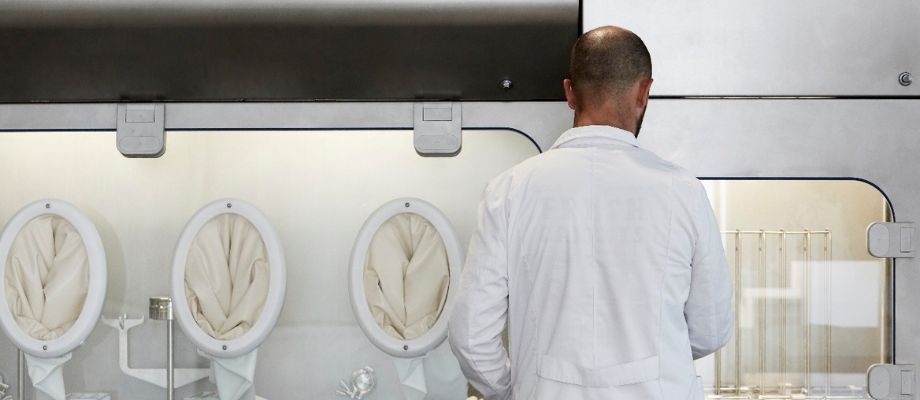 Image: Litek Pharma
Open Model
- Operations are performed directly in Grade B classified cleanrooms and, in some cases, include Grade A areas, preceded by a sequence of Grade D and C rooms in accordance with GMP requirements for the progressive entry of personnel and reduction of microbiological contamination. Human intervention takes place in the area with the highest classification.
- A cascade of changing rooms is required, involving multiple changes of garments, shoe covers, gloves, masks and PPE.
- Air handling units (AHUs) must overcome higher filtration pressure drops and handle greater airflow rates to meet the more stringent classification requirements. This increases energy consumption and places greater demand on the HVAC system.
- Higher thermal loads result in higher OPEX for cooling and heating.
- Greater reliance on operating personnel and more frequent environmental monitoring and validation.
Estimated economic implications:
- Initial investment (CAPEX) is generally lower for certain components, particularly because specialised closed-system equipment is not required.
- However, annual operating expenditure (OPEX) can be up to 60% higher than with the closed model, due to energy consumption, intensive use of consumables and staffing requirements.
Closed Model
- Product handling is performed within isolators or closed systems located in Grade D or, in some cases, Grade C cleanrooms.
- Personnel flow within the cleanroom is drastically reduced.
- Fewer changing rooms and gowning steps are required.
- Smaller AHUs can be used, without the need to overcome such high pressure drops.
- Less classified space and lower environmental validation requirements.
Estimated economic implications:
- CAPEX may increase by up to 15–20% due to the investment in isolators and specialised technology.
- However, OPEX is significantly reduced: consumables per batch can decrease by up to 90%, while overall energy consumption and staffing requirements are reduced proportionally.
What Drives OPEX in an Open Model?
- High consumables usage per batch: gowning, disposable materials and associated validation activities account for a significant proportion of operating costs.
- Higher staffing requirements: more personnel in the cleanroom means more training, greater risk of human error and higher expenditure on PPE.
- Higher energy demand: oversized AHUs, higher-capacity chillers and more extensive validation requirements associated with Grade B environments all contribute to increased energy consumption.
These factors do not mean that the open model is less valid than the closed model; rather, they reflect a different operating cost structure. Depending on the type of production, staff turnover, number of batches and other factors, one model may be more suitable than the other. The balance between CAPEX and OPEX must therefore be assessed on a case-by-case basis, with the final decision based on which approach best aligns with the client’s strategy.
Conclusion: ROI as an Evaluation Criterion in Advanced Therapies
In projects where each batch may represent a unique and critical treatment, as is the case with advanced therapies, facility design has a direct impact on operational sustainability. For this reason, rather than considering capital expenditure (CAPEX) or operating expenditure (OPEX) in isolation, it is advisable to adopt a broader approach by incorporating return on investment (ROI).
ROI provides a comprehensive basis for comparing both models — open and closed. It can be expressed as:
ROI = (Operational Savings + Efficiency / Compliance Benefits) / Initial Investment
This analysis is not intended to establish that one model is inherently superior to the other, but rather to provide clients with the tools they need to make decisions based on their specific manufacturing requirements, expected facility lifecycle, number of batches per year and availability of qualified personnel.
In short, there is no universal solution. The key is to consider all relevant factors — CAPEX, OPEX and ROI — and carry out a strategic assessment based on the specific objectives of the project.
In projects where each batch may represent a unique and critical treatment, as is the case with advanced therapies, facility design has a direct impact on operational sustainability.
The closed model requires a higher initial investment but offers more efficient, safer and more scalable operations. Its return on investment (ROI) can be justified not only in economic terms, but also from a regulatory and operational perspective.
By contrast, choosing an open model may offer an attractive CAPEX profile, but can compromise efficiency and scalability in the medium term.
Designing with ROI in mind makes it possible to align engineering decisions with strategic business objectives. And in the advanced therapies sector, that is what makes the difference.